




A pair of electrodes
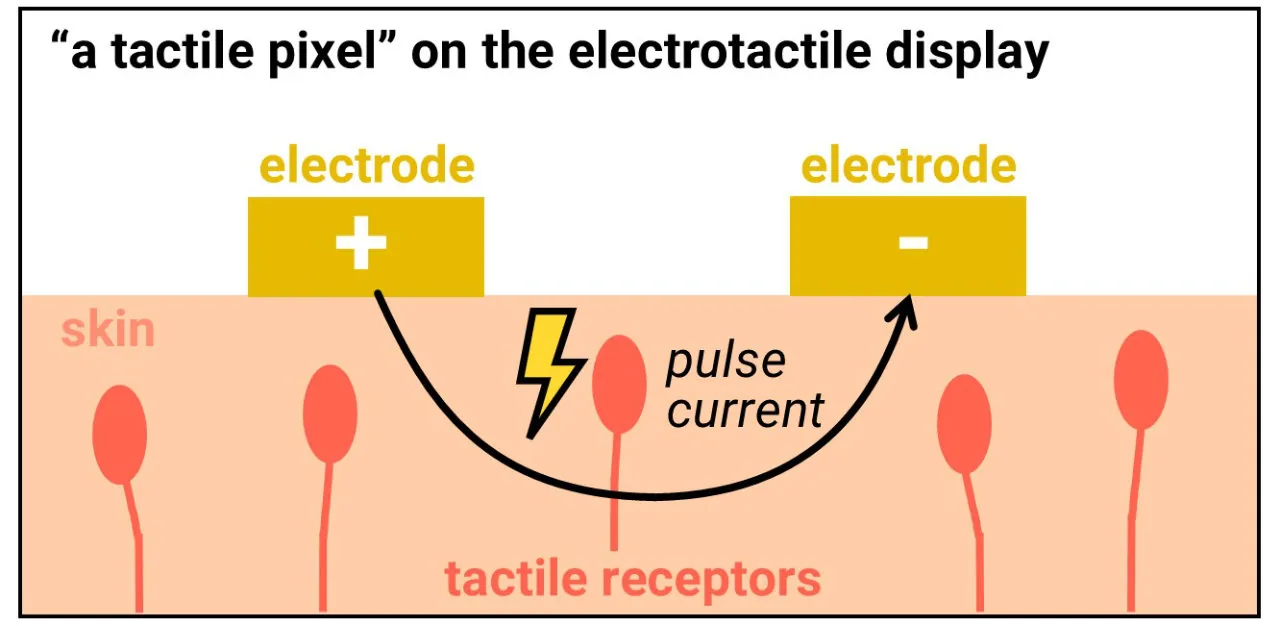
In TacTex the two electrodes are two conductive yarns in the weave. Tiny current pulses between them stimulate the touch receptors under the skin.
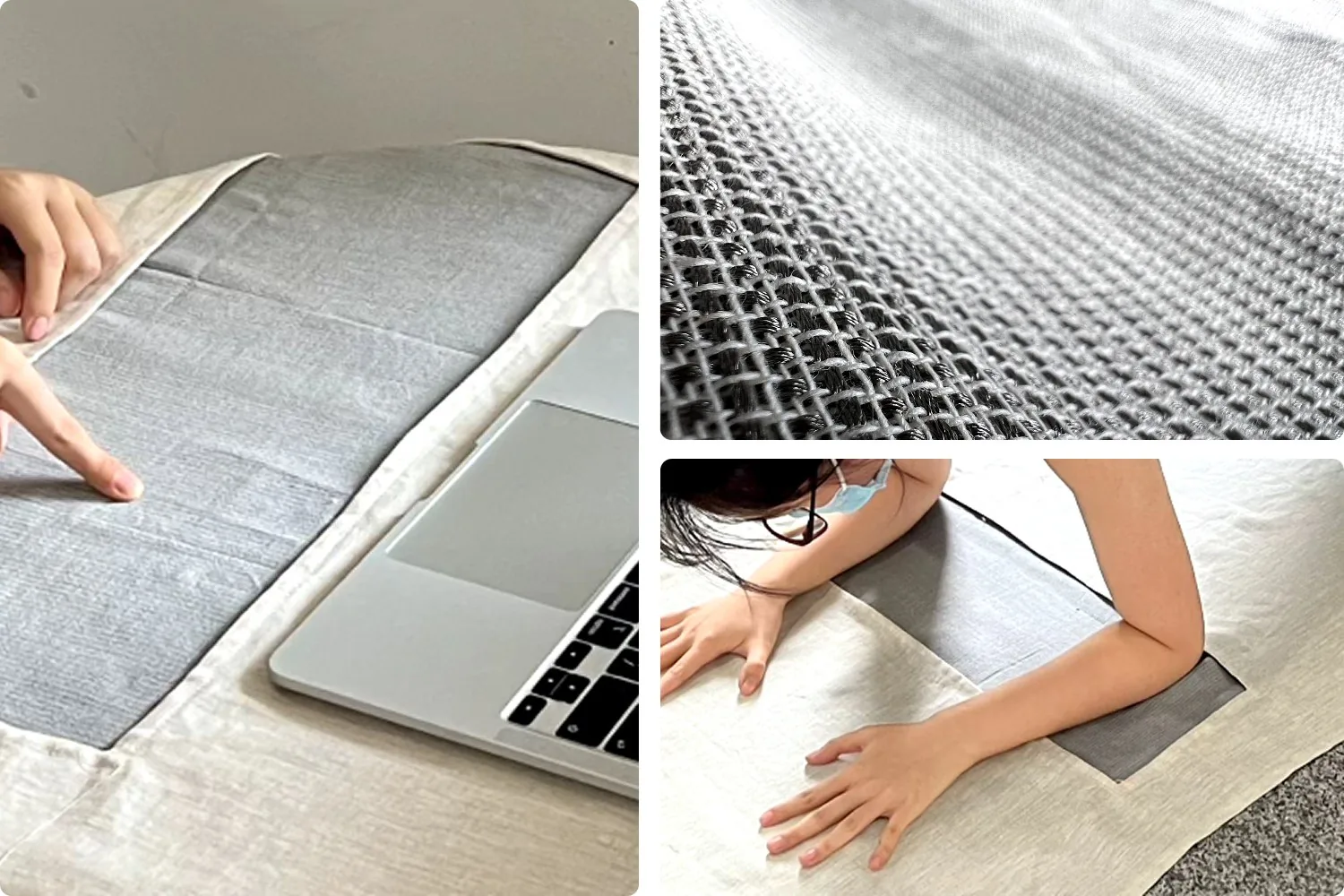
We developed a fabric that works as a tactile display: it renders patterns you can feel directly on the skin and senses where you touch it. The display is electrotactile: tiny pulses stimulate the touch receptors under the skin, so soft cloth produces rich, controllable sensations.
Dense electrode grids normally fight fabric, so prior interfaces attached patches on afterwards. TacTex weaves the electrodes into the cloth in a single run on a standard loom: the finished textile is already a display and still feels like everyday fabric.
Soft cloth renders patterns you can feel by stimulating receptors under the skin, with nothing physically moving.
1The tactile pixel
Each “tactile pixel” on the display consists of a pair of electrodes; in TacTex, these are two conductive yarns in the weave. Whenever the pixel is supposed to be felt, our system passes tiny current pulses between the electrodes, which stimulate the tactile receptors under the skin, causing a sense of slight touch, with nothing physically moving.
2Patterns and qualities
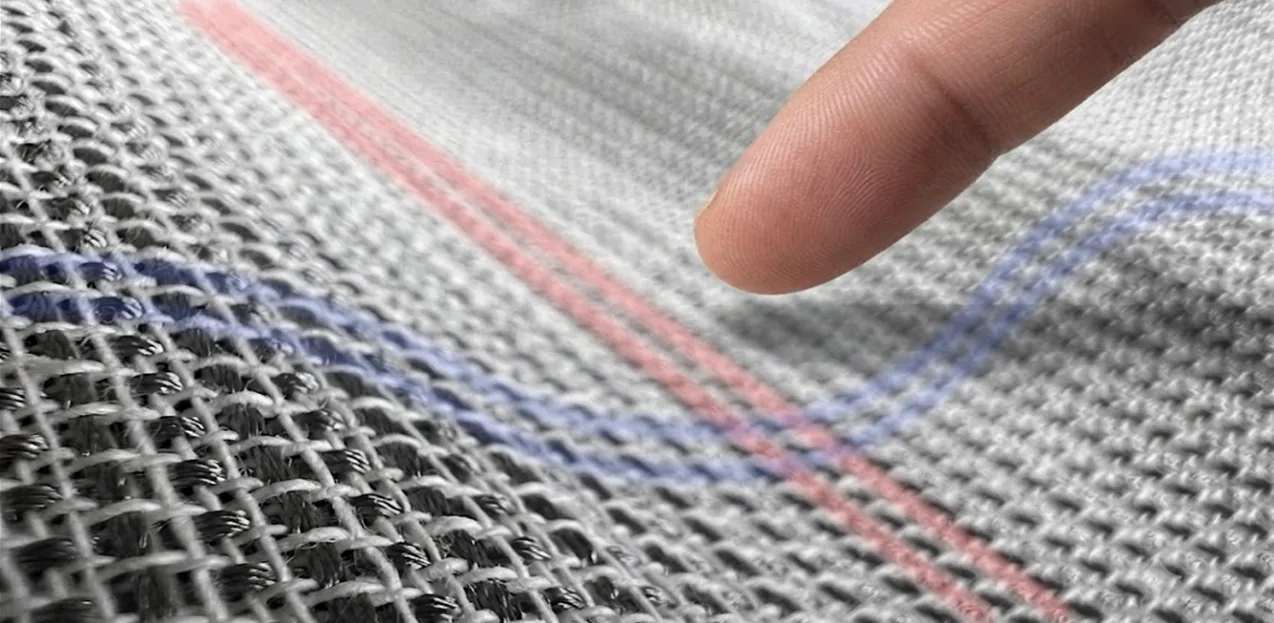
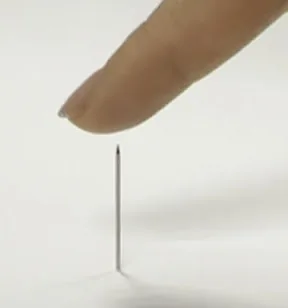
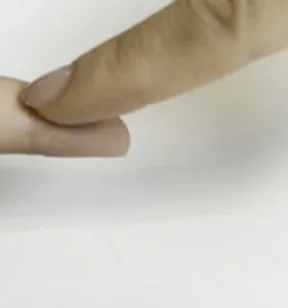
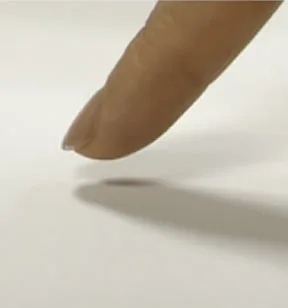
Activating several pixels together draws a static pattern, such as a thin vertical line; shifting the active pixels over time draws a dynamic pattern, such as a line sweeping across the palm. Changing the pulses themselves changes the quality of the sensation: pricking, caressing, tapping, or pressing.
Three parts make this work: the woven textile that carries the electrodes, the circuit that drives and reads them, and the connection between fabric and electronics.
1The textile
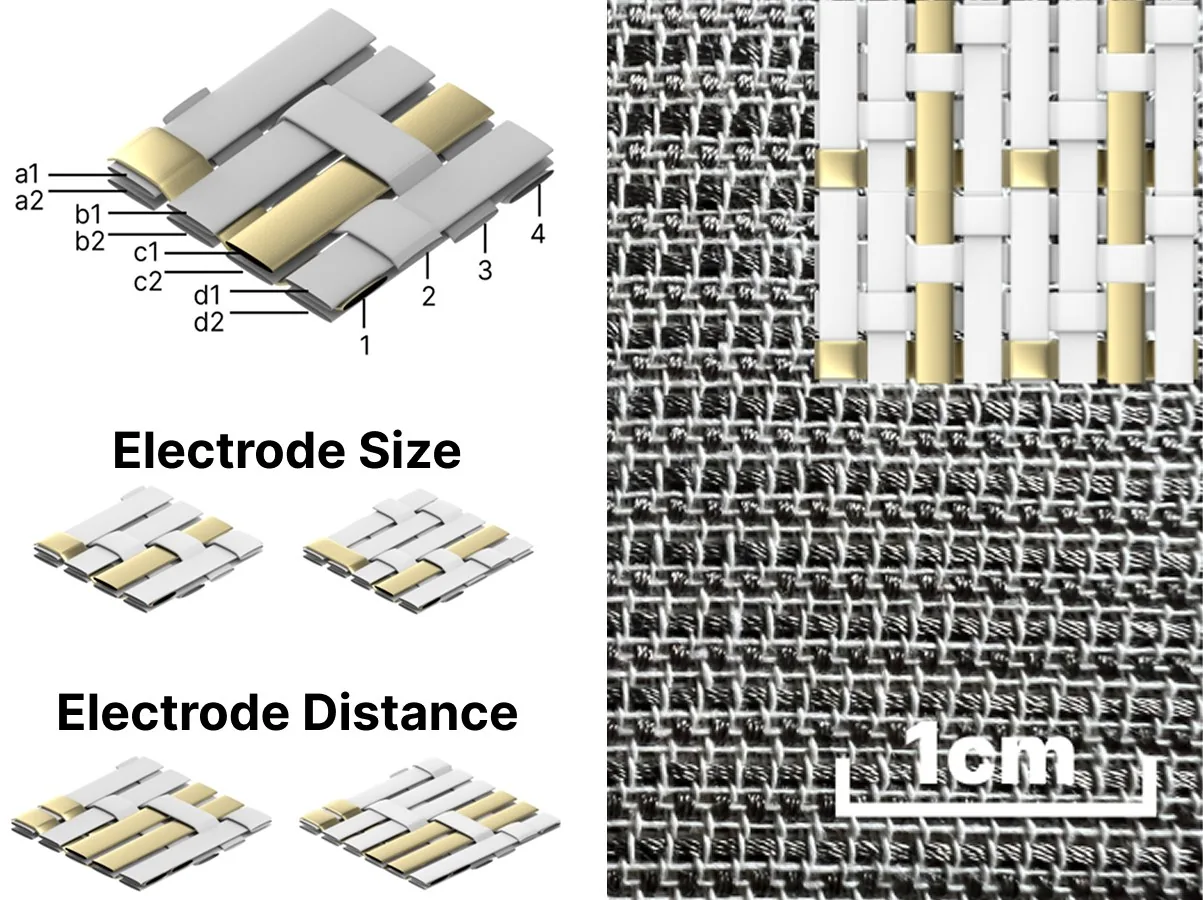
Conductive yarns run lengthwise and crosswise through a multi-layer weave, and non-conductive yarns sit between them so the two directions never short-circuit inside the fabric, while both stay exposed on the side that meets the skin. That shared electrode grid drives both electrotactile stimulation and capacitive touch sensing. Electrode width and spacing are set simply by yarn counts, down to 2 mm. The same structure also supports double-sided displays, insulated backs, and decorative colours.
2The circuit
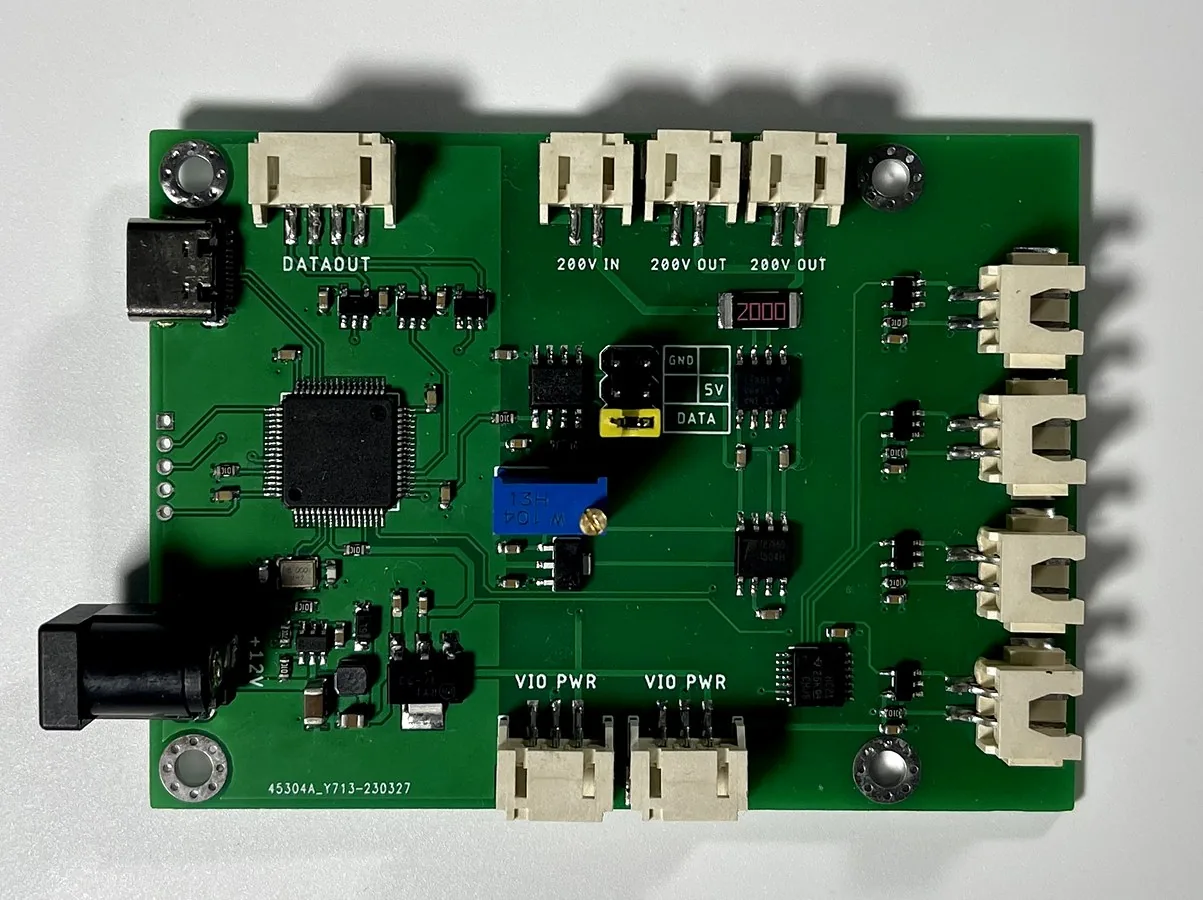
One circuit, two jobs. TacTex senses touch with the hardware that stimulates the skin: the supply, the switches, and the electrodes, shared in turns (time-division multiplexing).
While injecting, pulses pass through an activated pair of electrodes and the finger, and are felt. While sensing, a short pulse passes through a sampling resistor, and the sensing board compares its voltage with a reference: a match means the pair is not touched, a difference means it is.
Each electrode switch can tie its electrode to high voltage, to ground, or to high impedance; the schematic draws only the two switches of the active pair.
3The connection
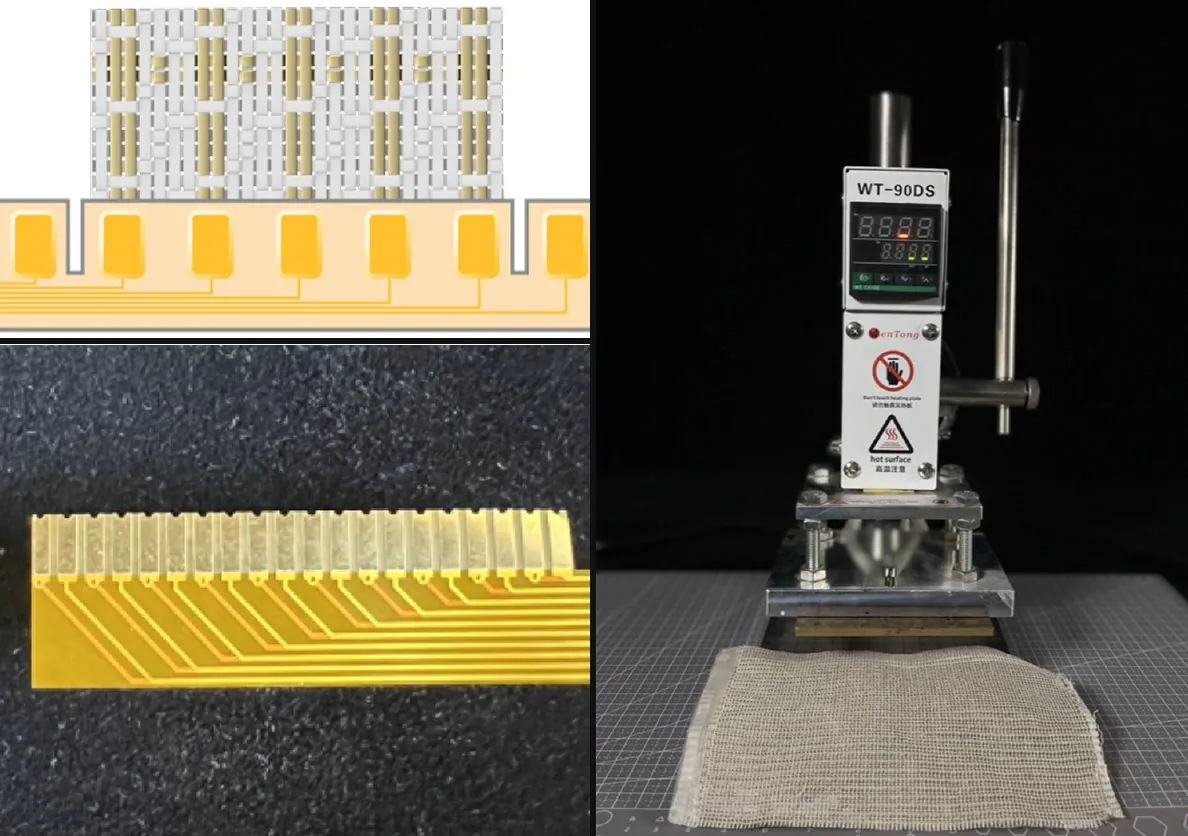
Fabric cannot be soldered, so the electrode yarns at the edge of the textile are clamped against a flexible printed connector with a conductive adhesive, giving each yarn its own clean channel to the driving board. Because the electrodes are continuous lines across the cloth rather than individual pads, a 512×512-point display only needs 512 + 512 connections instead of one per point.
We evaluated whether people can actually read the display: tell the sensation qualities apart, and recognise the static and dynamic patterns.

1What we render
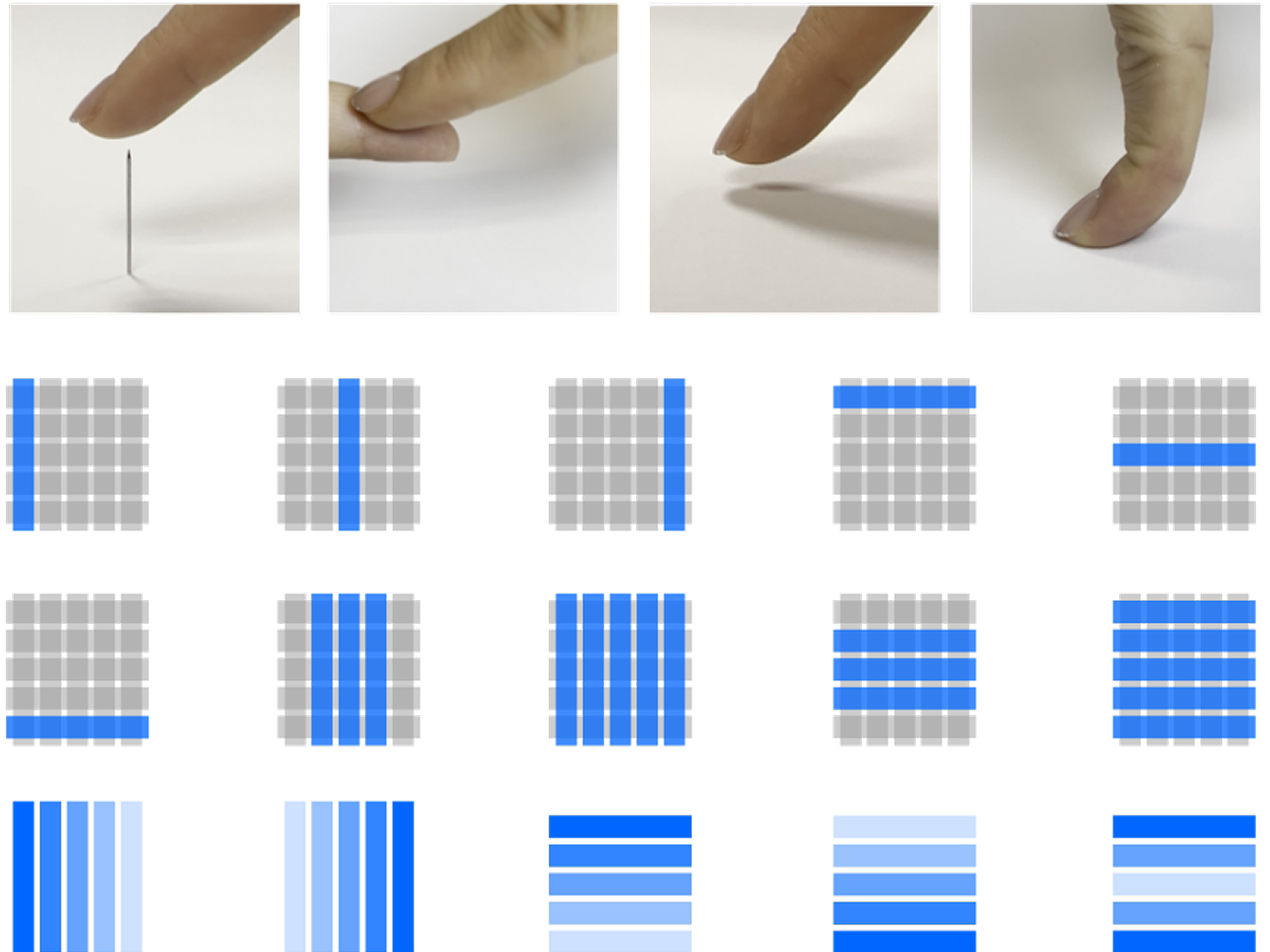
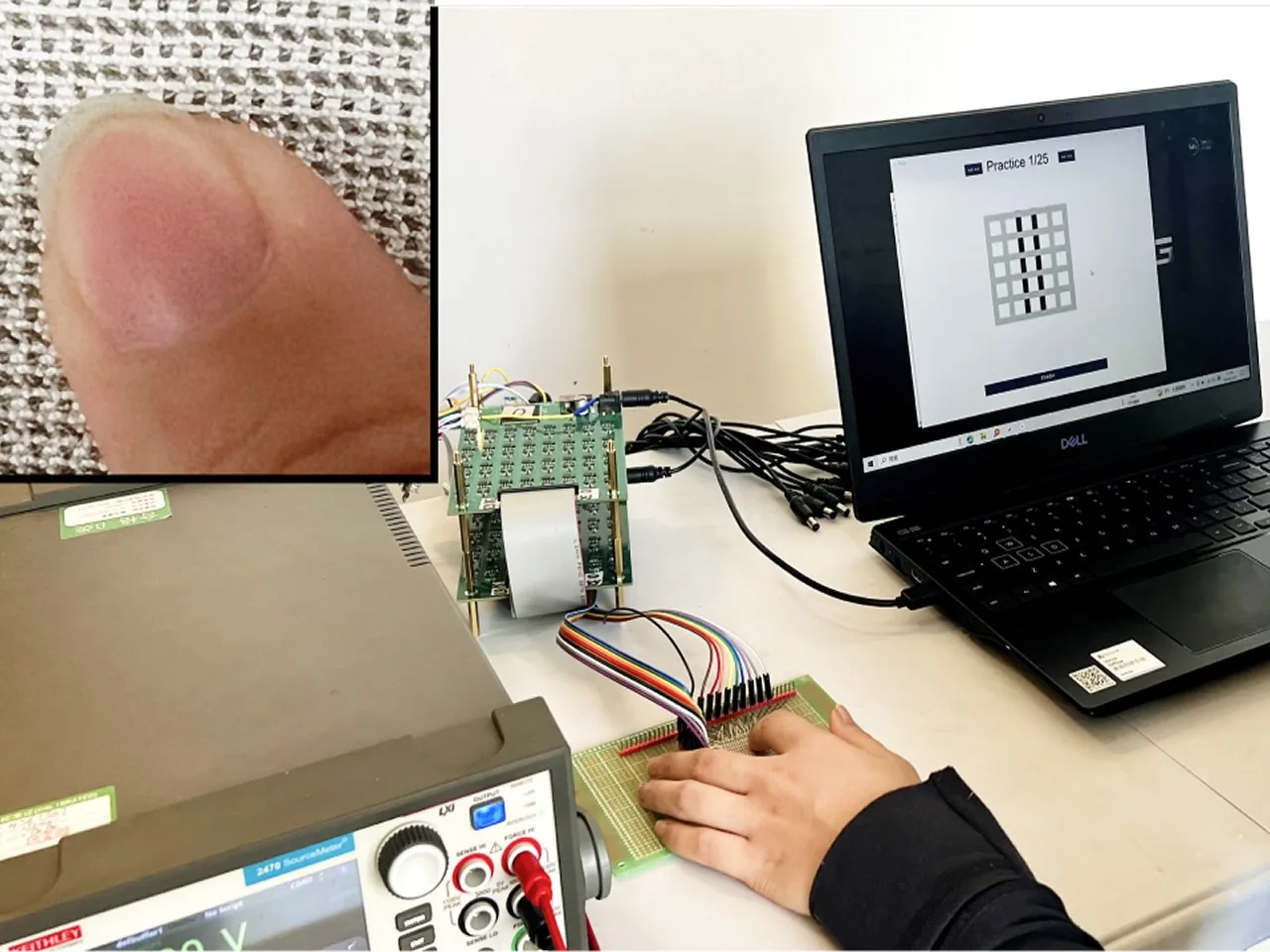
The display produces four sensation qualities (pricking, caressing, tapping, and pressing) plus ten static patterns, such as a thin vertical line, and ten dynamic patterns, such as a line sweeping across the fabric.
2The protocol
Participants felt each stimulus on the textile without seeing it, then identified which quality or pattern it was and judged whether pairs of sensations were the same or different.
Twelve healthy adults took part, none with prior experience of electrotactile stimulation. In each of three tests (qualities, static patterns, dynamic patterns), every stimulus was presented six times in random order. Afterwards they rated the electrode-induced pain at 2.75 on average (SD 1.60) on a scale from 0, no pain, to 10.
3What we found
Rows are the pattern presented, columns the pattern reported. The purple diagonal means responses mostly landed on what was actually rendered; the red cells off the diagonal are the mistakes.
Caressing was the hardest quality: 15 of its 72 presentations were reported as pressing. Pricking and tapping were never reported as pressing. That fits how participants described them: pricking and tapping as discrete sensations, caressing and pressing as continuous.
This is a collaboration between the Institute of Software (Chinese Academy of Sciences), Zhejiang University, and Hangzhou City University by:
Together with Shengsheng Jiang, Qi Wang, Wei Sun, and Feng Tian.
This work is published at ACM CHI 2024 (see paper via DOI). Authors’ print is available here (PDF).
@inproceedings{lin2024tactex,
  title={TacTex: A Textile Interface with Seamlessly-Integrated Electrodes for High-Resolution Electrotactile Stimulation},
  author={Lin, Hongnan and Liu, Xuanyou and Jiang, Shengsheng and Wang, Qi and Tao, Ye and Wang, Guanyun and Sun, Wei and Han, Teng and Tian, Feng},
  booktitle={Proceedings of the 2024 CHI Conference on Human Factors in Computing Systems},
  year={2024},
  doi={10.1145/3613904.3642873}
}